

In the Sikkim Himalaya region, the periodic efforts on gradual expansion of net cultivation area under
organic agriculture are often constrained by the periodic manpower shortage, high daily labor wages, and other associated expenditures of mass labor deployment.
Adaptation of need-based efficient farm mechanization narrows down this gap of periodic manpower availability, improves energy usage, saves cost and time for the
farmers, and thus ensures higher crop productivity and increased profitability in hill agriculture. The average farm power availability in the Northeast Indian states
(kW/ha) is very low (0.37-0.69; except Tripura) from the slow progress in large-scale adaptation of farm mechanization and automation options in farmers’ field in the
Northeast Indian hills. With this background, technological intervention and supportive skill development efforts from the public institutions become indispensable to
increase overall farm productivity in hill agriculture practiced in the Sikkim Himalayan region.
Since early 2022, ICAR NEH Sikkim center has initiated community-based demonstrations on portable
lightweight farm machinery under Tribal Sub Plan to reduce the manual labor burden, unrestrained dependency on draught animals and high cost involvement
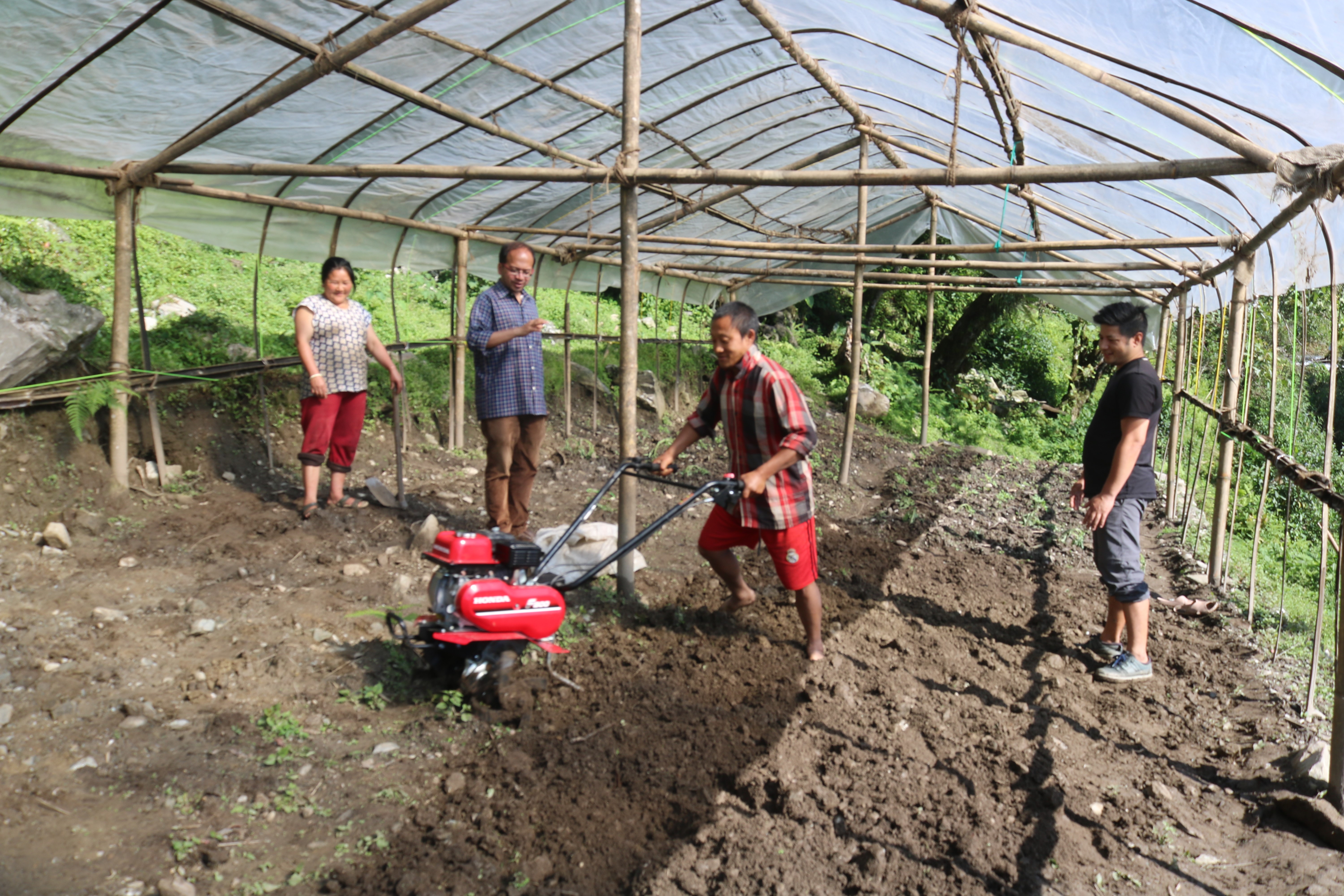
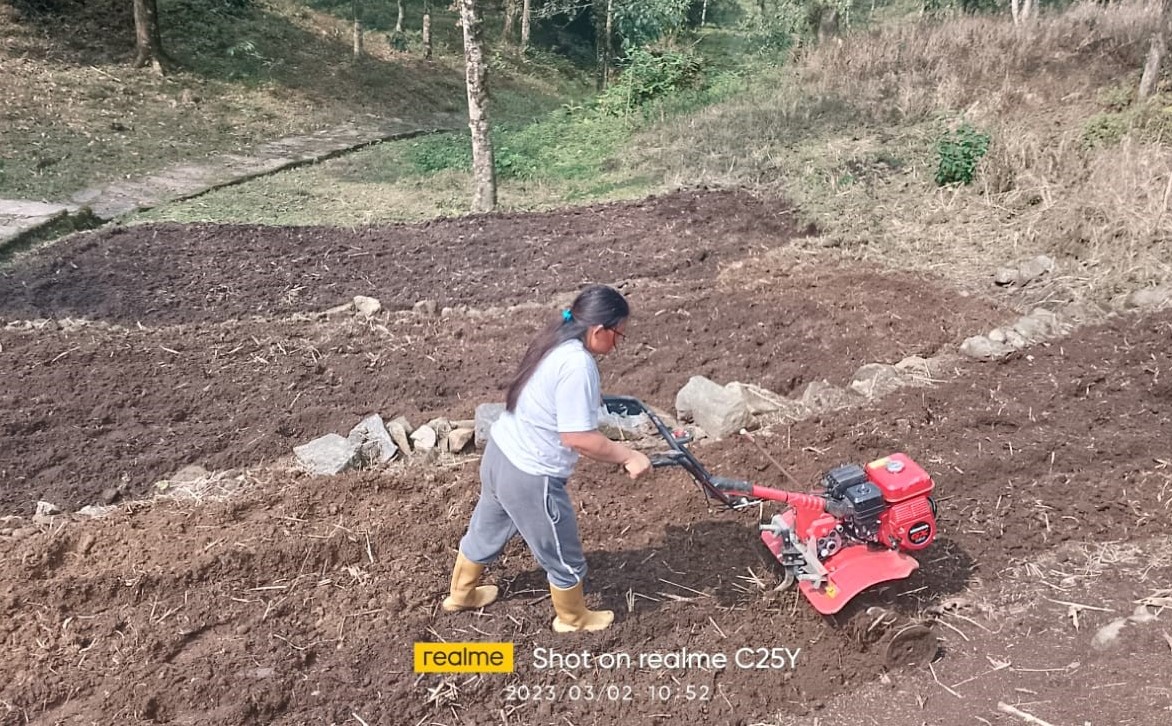
in labor-intensive, time-consuming farm operations. Traditional field preparation options using a bull were replaced by an easily transportable, portable,
lightweight (30-40 kg) tiller cum weeder (3-HP) for community-based usage for improving net farm efficiency, crop productivity, and increasing farmers’ profitability
from the relatively narrow, steep hill terraces of the Dzongu region, North Sikkim. The demonstration of the gender friendly lightweight field tiller has gained considerable
popularity among the women and old aged farmers for its’ operational easiness; thus increased the overall level of community adaptation. Location-specific 86 farmer clusters
were formed based on scattered settlement patterns across 12 Lepcha villages of lower Dzongu, viz., Lingthem, Noom Panang, Lingdong, Barfok, Hee-Gyathang, Bringbong, Gnon, Sangdong,
Gor, Taryong, Shagyong and Sangtok. Field demonstration was conducted for each location over past four years. A total of 619 tribal farmers benefited from the cluster-based community
farming venture through the establishment of custom hiring centers. The members of each farming cluster got a paid service, and the balance was maintained by the cluster leader in a
separate bank account for machine repairing after the warranty period in coming times. Thus, adaptation of mechanized ploughing using small tillers reduced the annual bull maintenance
cost to almost nil, as well as substantial daily savings of operational cost by 47.5-64.8% with almost doubled working efficiency and time saving for cultivating ~1000 sq. m. of agricultural
land (excludes machine depreciation cost). All together, the annual engagement of the human labor force was reduced by 43.3-69.5% in different maize-based cropping systems, ensuring a higher
annual profit for community farming (16.3-40.3% input costs per crop cycle), to the adapted farmer clusters under TSP. The field-scale adaptation of chaff cutter units also reduced the daily
labor investment (work hours) by 60.5-75.8% for daily feed preparation in organic livestock farming. However, the challenges for technical expertise development in repairing and maintenance of
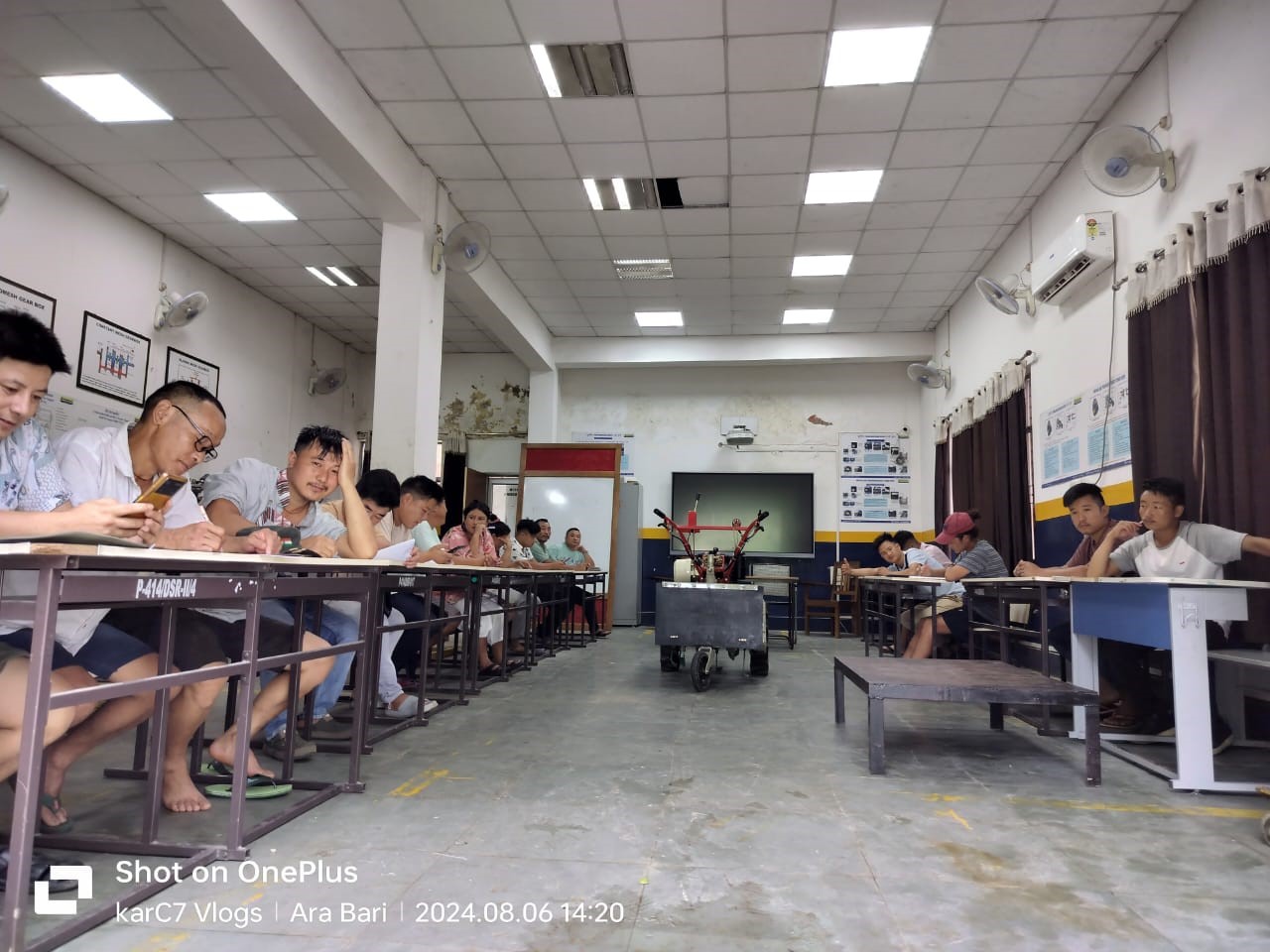
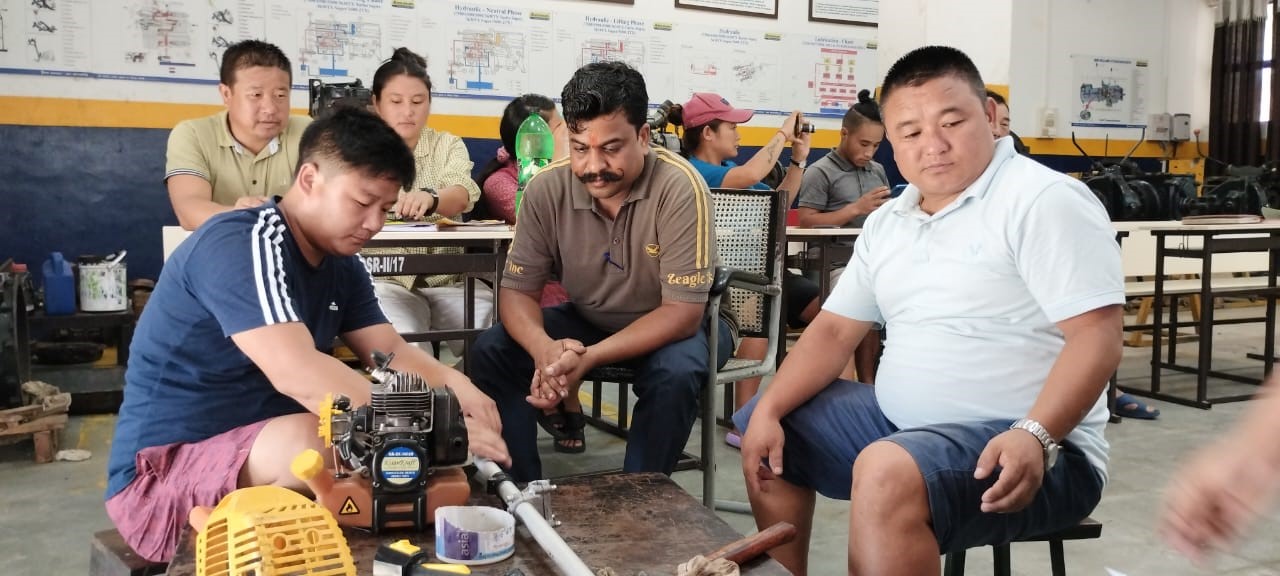
farm machinery hindered the prospect of long-term adaptation of farm mechanization in hill agriculture. Therefore, a supportive skill development training program for the farmers and selected
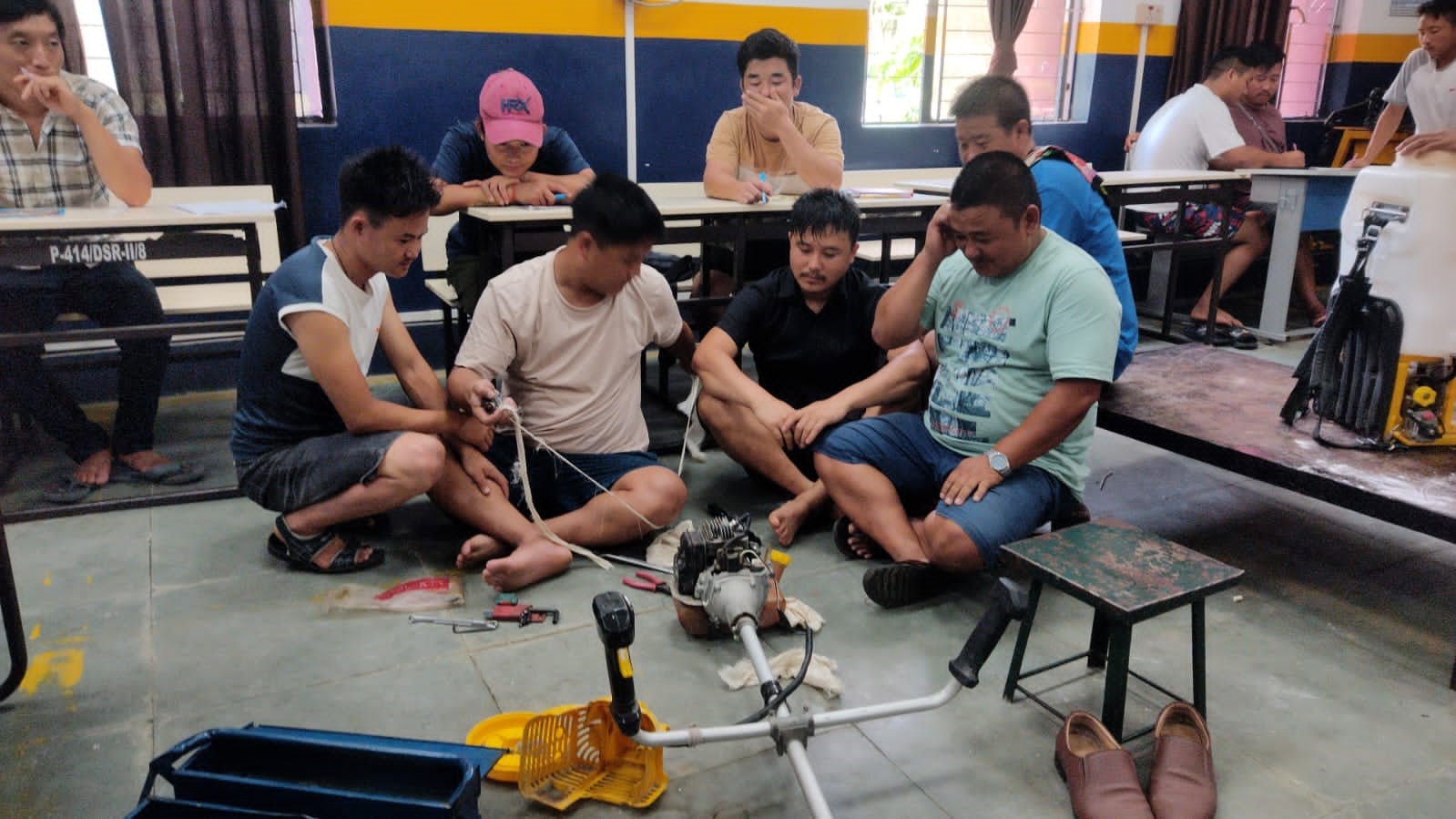
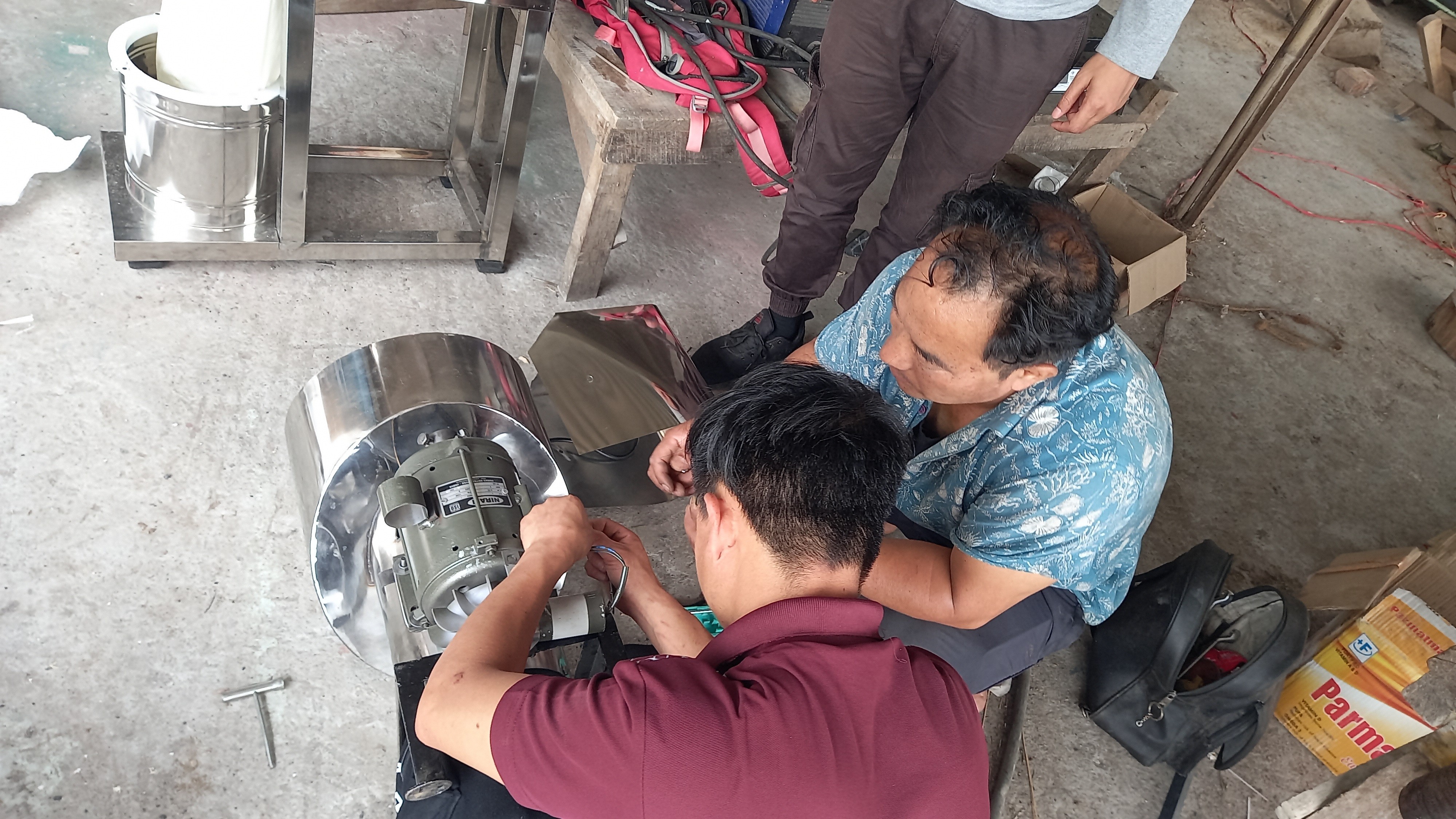
unemployed rural Lepcha youths of Dzongu was organized at the North Eastern Region Farm Machinery Training and Testing Institute, Bishwanath Charali, Assam during August 2024 under the Tribal
Sub Plan (TSP). The need-based hands-on training was aimed on repair and maintenance of diverse farm machinery, viz., power tiller, self-propelled power weeder, bush cutter, tractor-operated
agricultural machinery, and other aspects of operating plant protection, irrigation, and gender-friendly equipment.
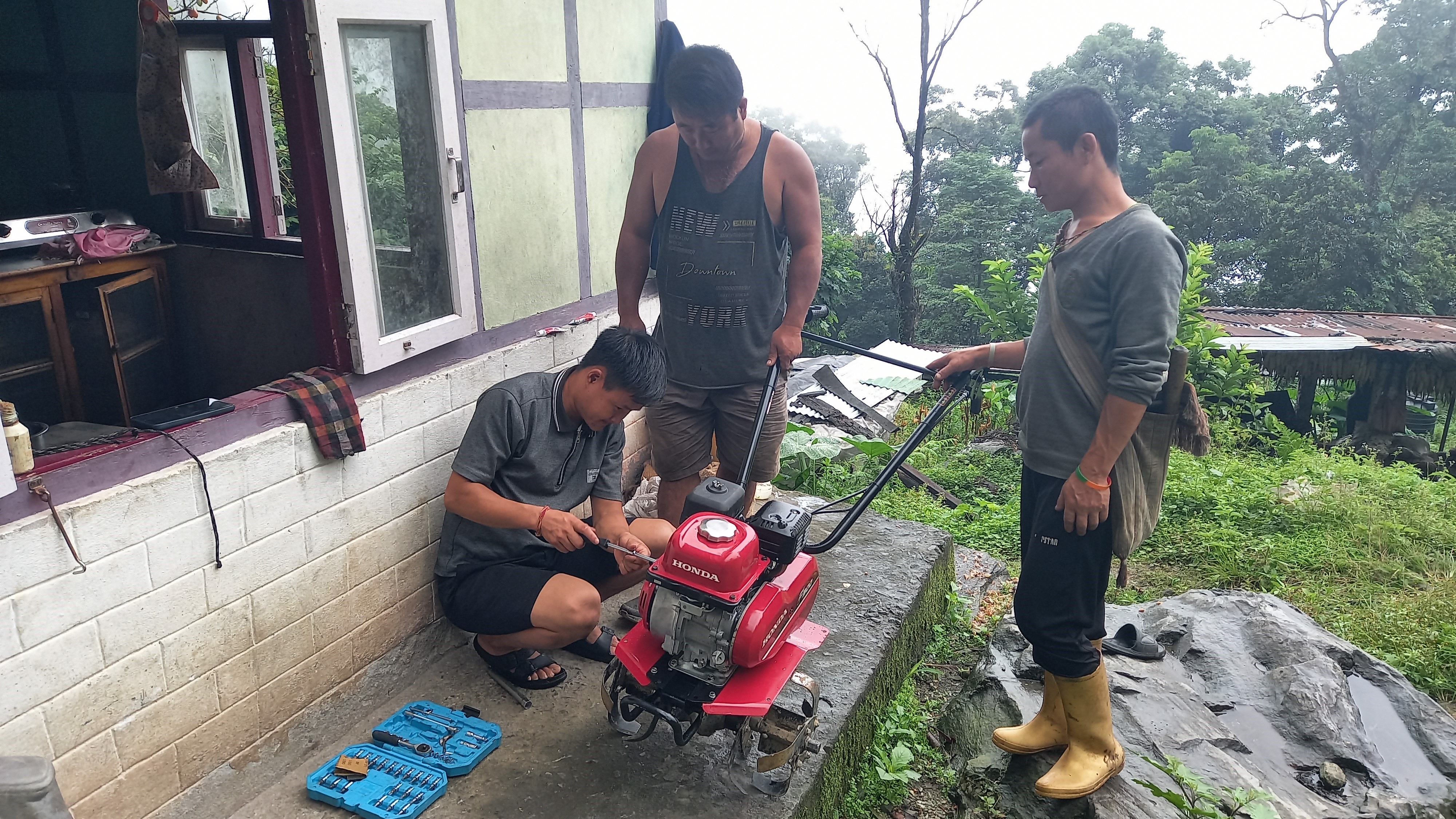
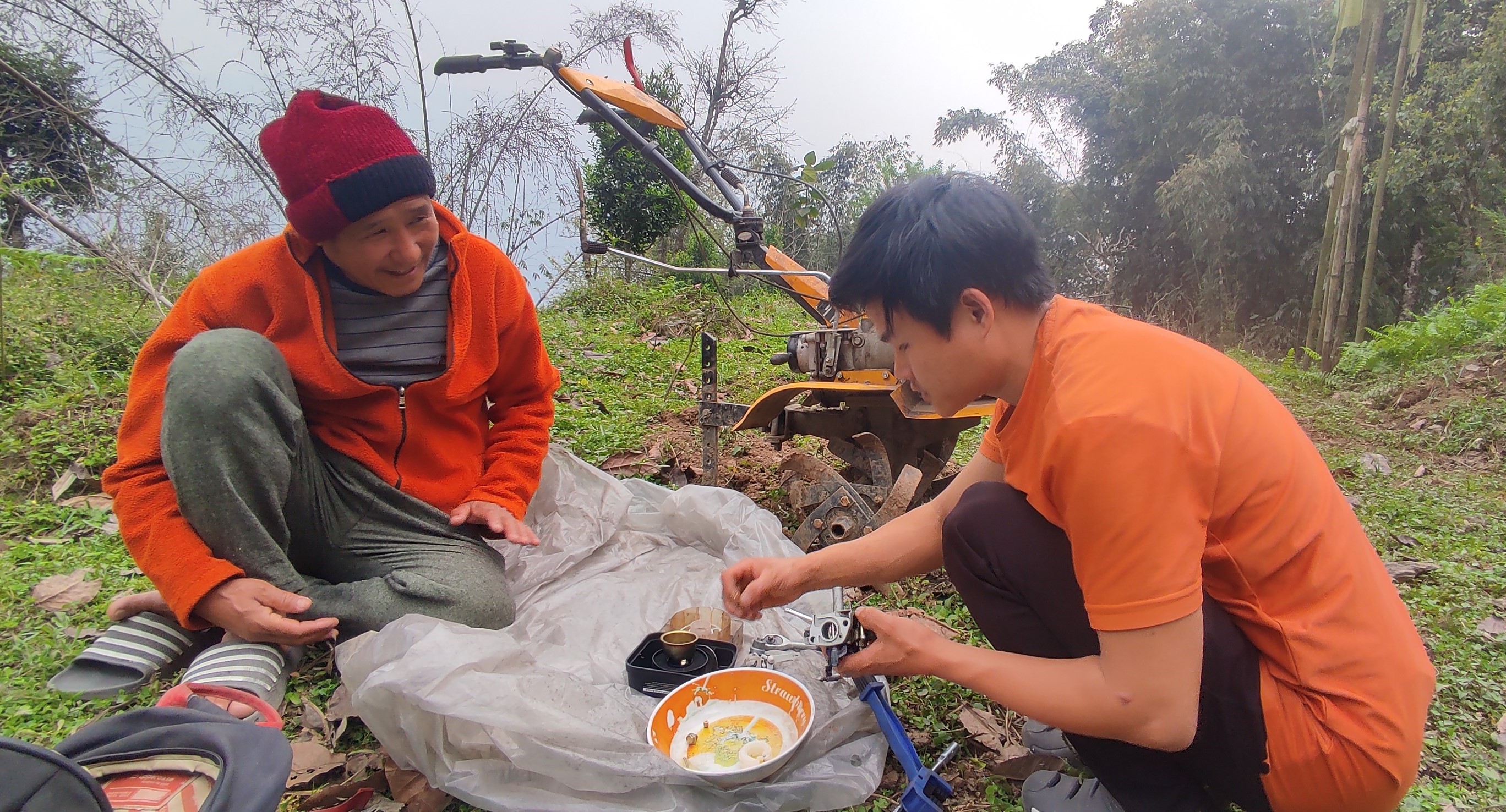
After getting trained at NERFMTTI-Assam, two youth trainees, Mr. Phurtshering Lepcha (Lingdong),
Mr. Sonam Lepcha (Shagyong) and Mr. Nimcho Lepcha (Gor) prominently emerged as the master trainers; they invested their own personal worth to start
a shared business on spares and repairing services for different farm machineries, including two-wheelers,. Their outlet was incarcerated at their
respective villages of lower Dzongu region in November, 2024. Such initiative was grasped for the first time in the Dzongu region, and their networking
service was gradually getting well established that secured an average monthly earning of ~₹18000-₹30000 from farm machinery repairing services and selling
machinery spares. They maintained their Separate bank account to deposit their profit periodically for future capital investment and further expansion of their
business venture. Thus, the implemented TSP intervention contributed to the unconventional aspect of boosting local economy and providing farm machinery repairing
services to the tribal farmers inhabiting across the distant scattered villages of Dzongu, north Sikkim. Now, they have started networking with other farmer trainees
from other villages to provide door-to-door machine repairing service in the distant locations of upper Dzongu. Thus, their acquired skill in farm mechanization and
technical expertise development under the Tribal Sub Plan (TSP) got replicated and facilitated agri-entrepreneurship development for the overall benefit of Sikkim’s
primitive Lepcha tribes, inhabiting Dzongu, North Sikkim.
 |
 |
 |
 |
 |
 |
 |
 |
 |
 |